Echoes
Enhancing Cultural Heritage Visits with Location-Based Audio Augmented Reality
Traditional audio guides often fall short in supporting natural exploration, overwhelming visitors with too much information delivered through monotonous commentary, and requiring manual controls that interrupt the flow of discovery, while also suffering from poor location syncing that leads to irrelevant content and limited accessibility for visually impaired visitors.
solution
A Location-Based Audio Augmented Reality system solves these issues by delivering concise, immersive, and personalized audio that plays automatically based on a visitor’s location, enabling natural exploration, relevant storytelling, and improved accessibility without disrupting the experience.
A location-based immersive audio experience that brings cultural heritage to life, delivering engaging storytelling that adapts to visitors’ locations and enhances exploration.
This project was centred around the Old Stone Bridge in Regensburg, a UNESCO World Heritage landmark and one of Germany’s oldest surviving bridges. Working with the Regensburg World Heritage Visitor Centre helped me understand these visitor patterns and the limitations of the current tools. Their insights and challenges became central to shaping the requirements for the audio AR experience.
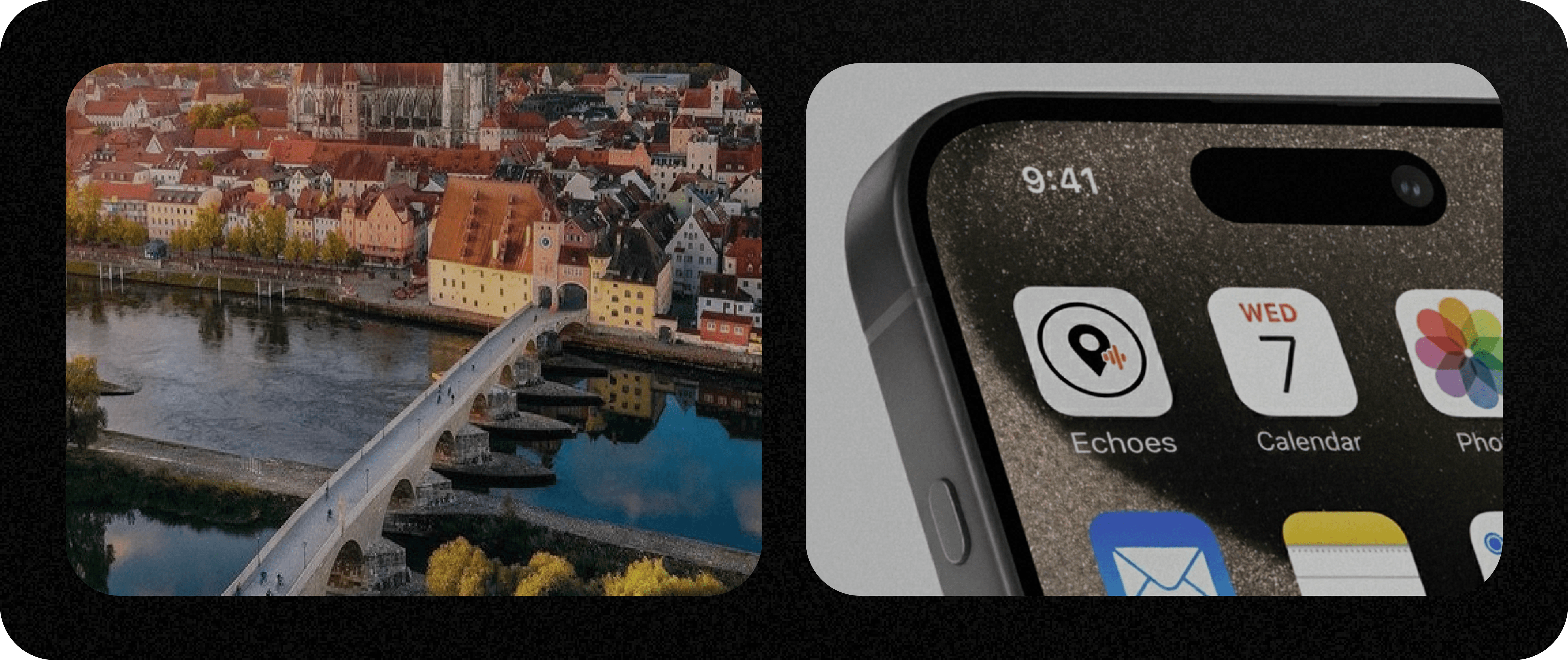
The goal was to create a mobile audio AR experience that gives visitors simple, personalized storytelling without overwhelming them or interrupting their natural exploration of the site. This can be achieved through location-based audio that delivers short facts or optional immersive stories as visitors move through the space. By syncing spatial audio to their real-time exploration, the experience becomes intuitive and naturally fits the way people walk through the site.
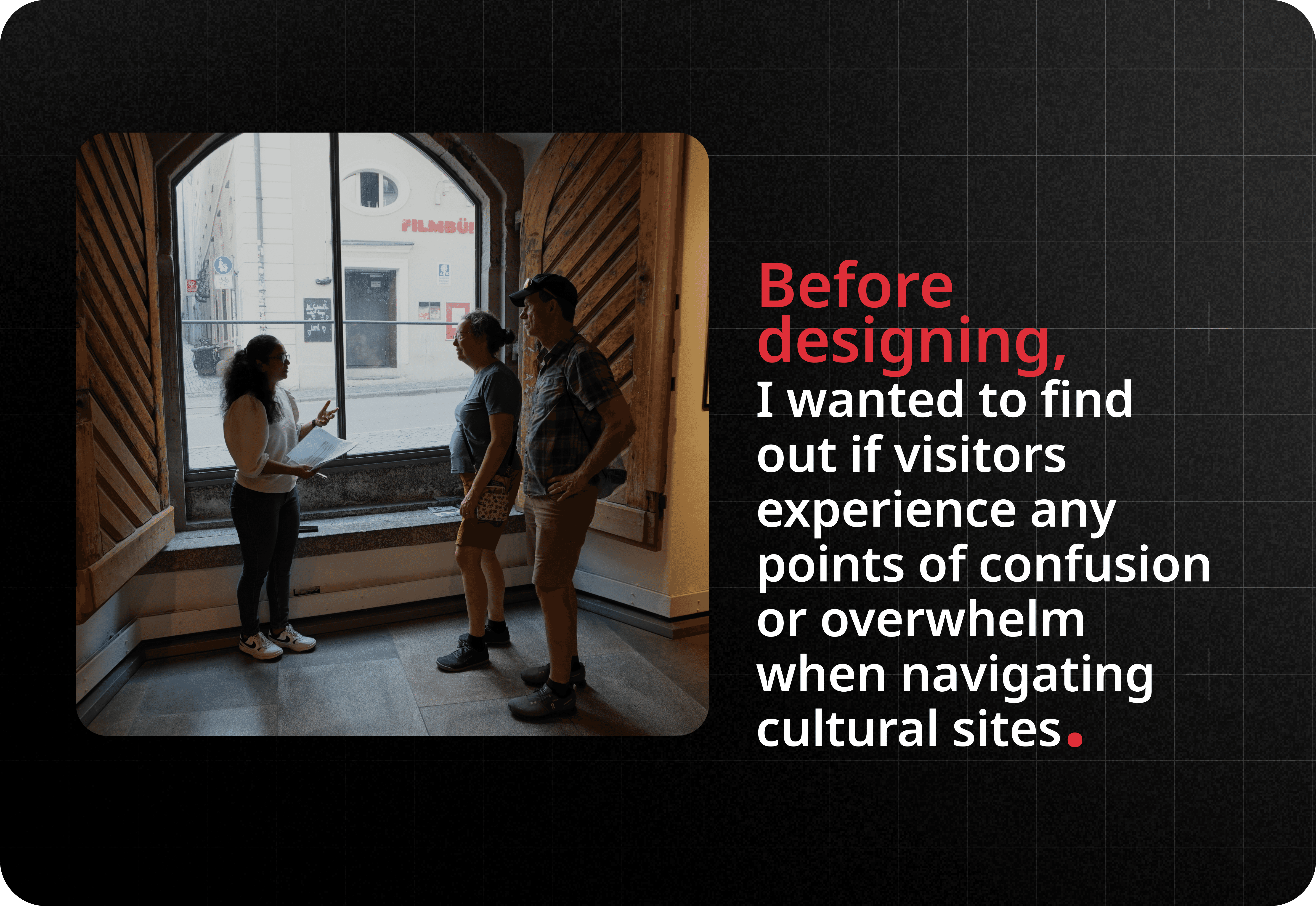

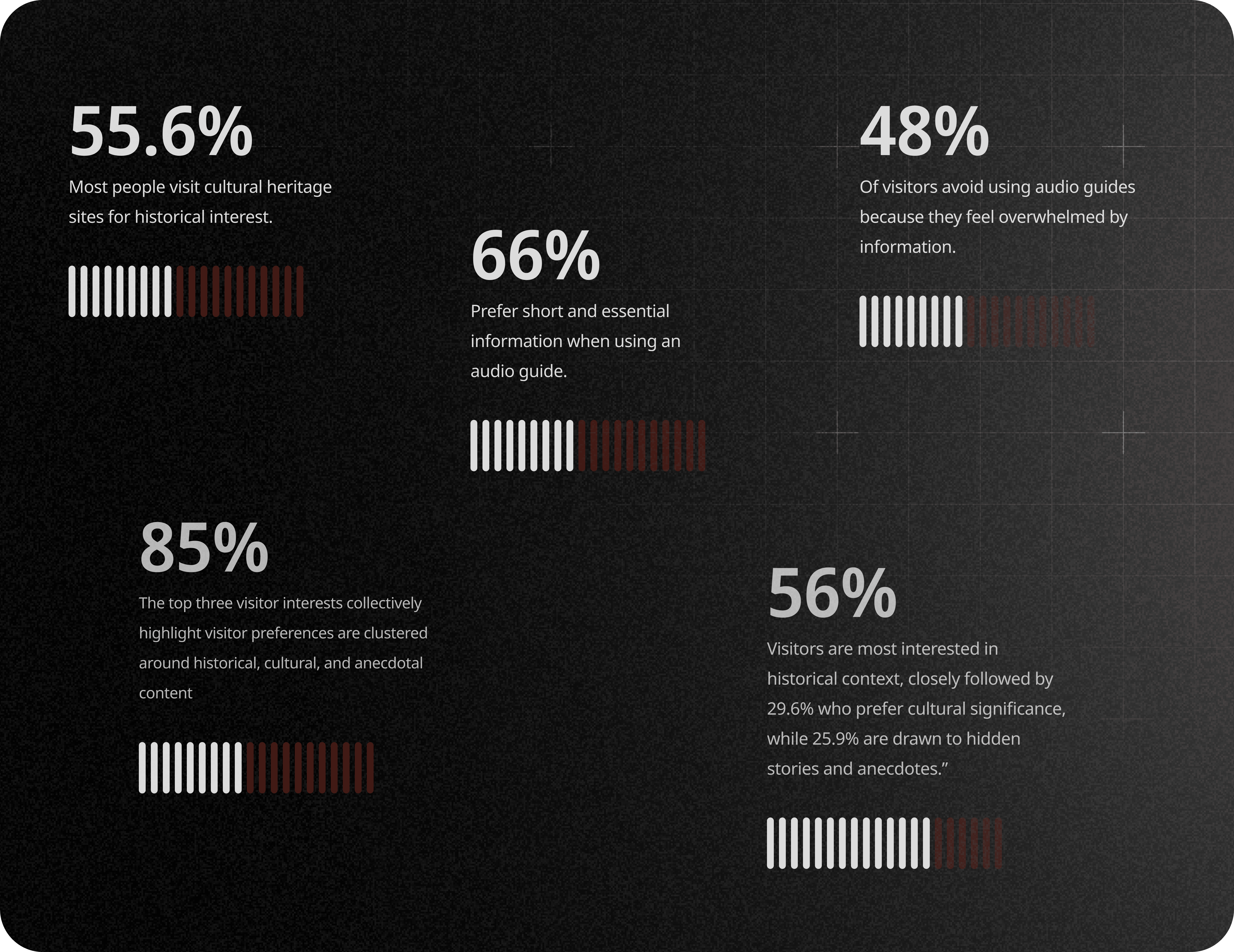
Quantitative research was conducted with 27 participants over two days of onsite interviews. To complement these insights, a survey distributed via QR codes at the visitor centre helped uncover patterns that interviews alone couldn’t reveal, providing a deeper understanding of user experiences, feature priorities, and informing the core feature set
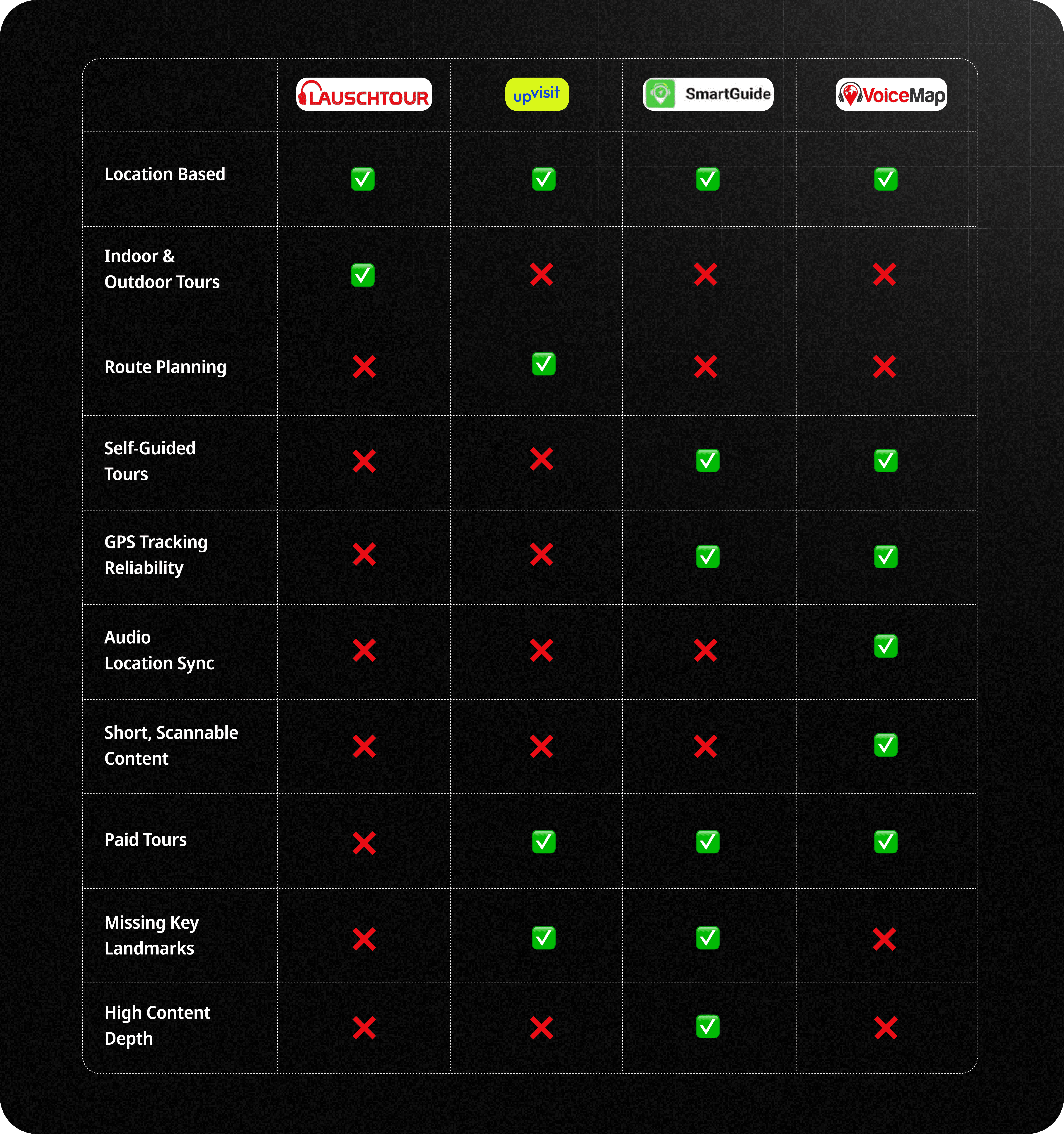
The competitor analysis highlighted the strengths and gaps in existing immersive audio experiences, showing how location-based storytelling effectively engages visitors while revealing opportunities to improve personalization, accessibility, and seamless interaction in our own solution.

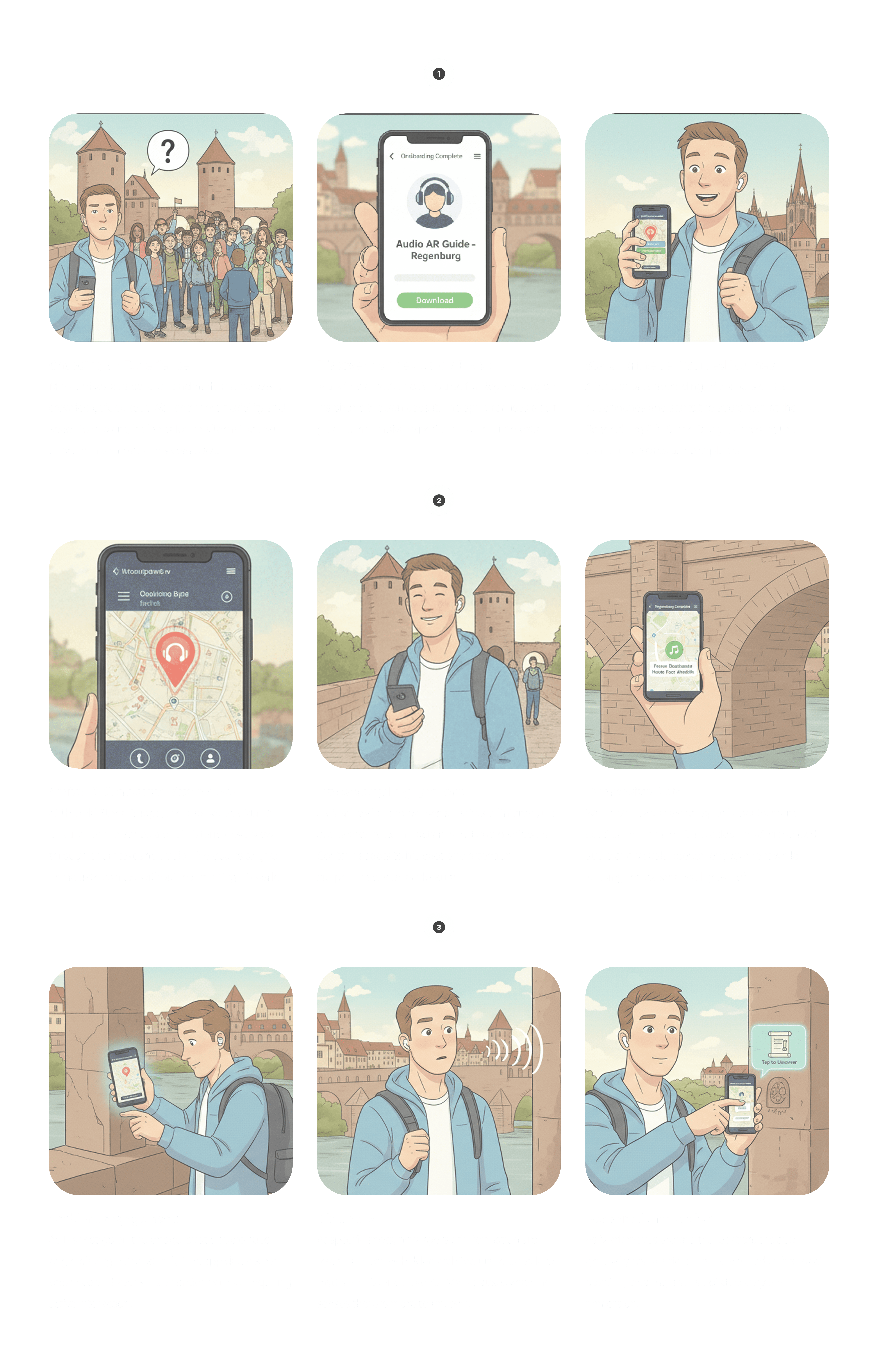
User Journey, Upon arriving in Regensburg, Mark is eager to explore the Old Town. At the Visitor Center, he chooses an audio guide over a group tour, recalling past experiences where tours felt rushed and off-topic. The audio guide lets him linger at sites that interest him and skip content that doesn’t, giving him full control over the pace and focus of his exploration.

The research revealed what visitors truly need during on-site exploration and exposed the limitations of traditional audio guides, providing clear direction for designing a more engaging, personalized, and seamless audio experience.
Audio Content Concept
Fact Peek Content
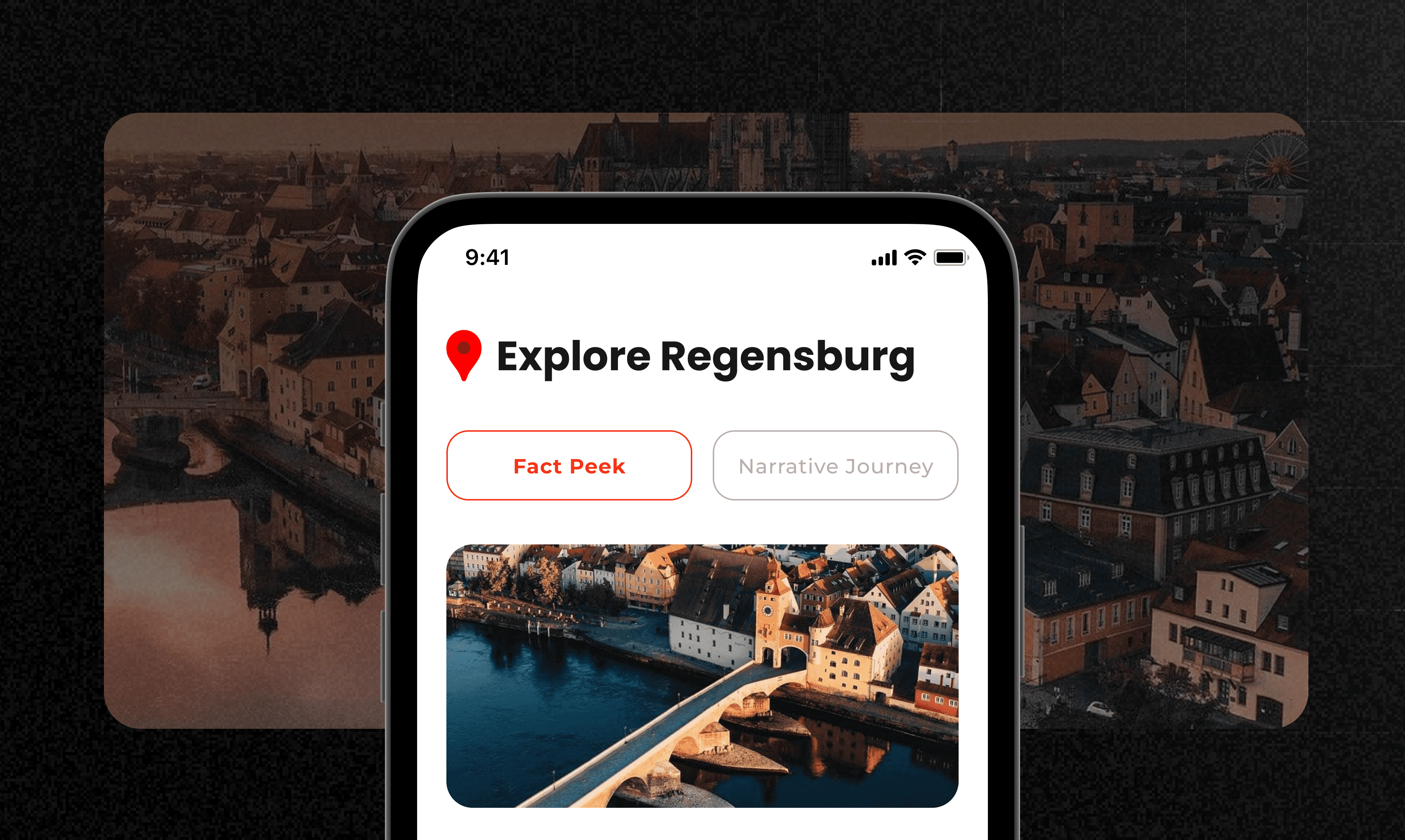
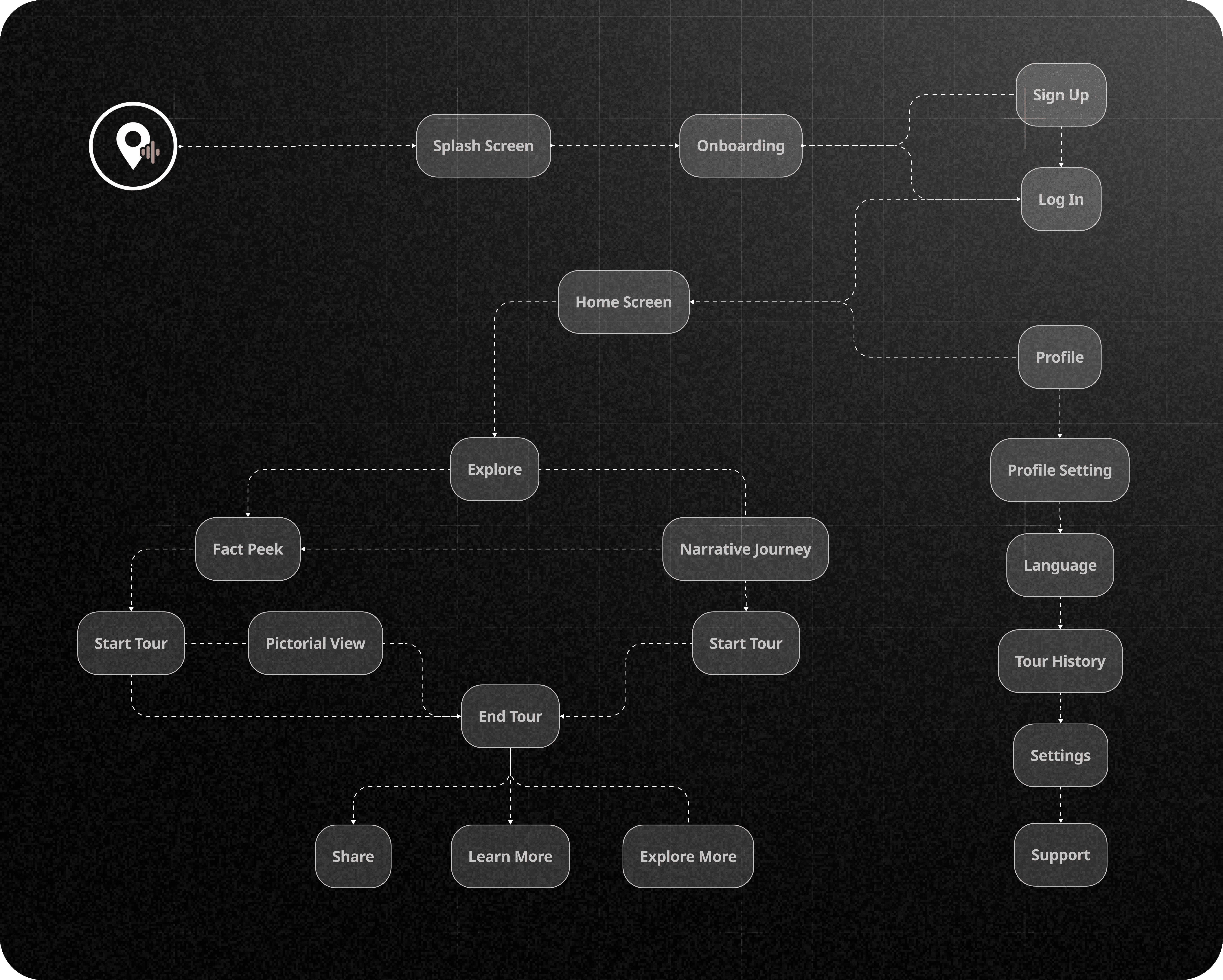
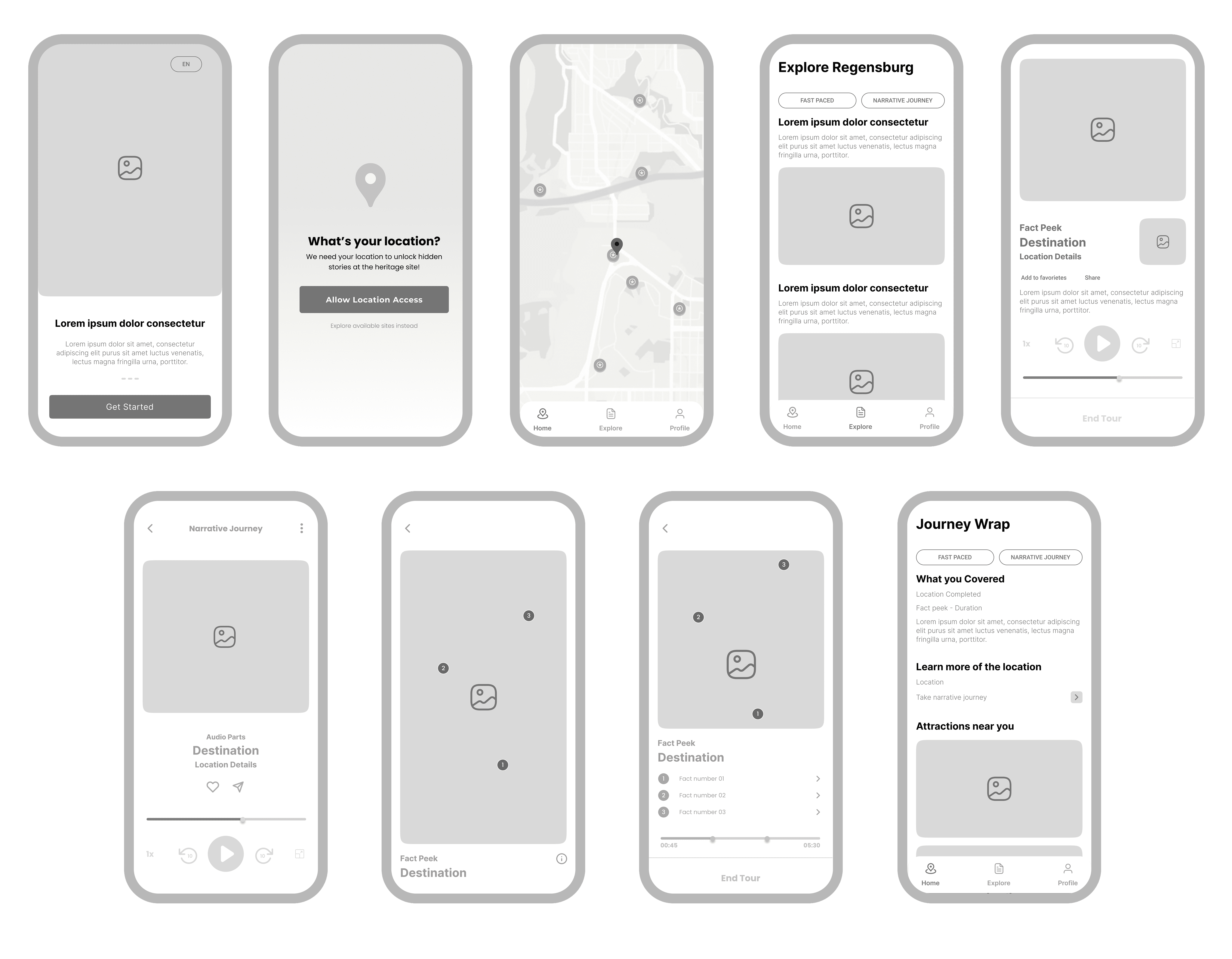
Fact Peek Mode delivers short, bite-sized audio snippets that are triggered by the visitor’s location on the bridge. This mode is designed for visitors who may have limited time or prefer concise, easily digestible information. By providing contextual, location-specific audio, Fact Peek Mode encourages visitors to observe their surroundings, explore at their own pace, and engage with the site without being overwhelmed.
Narrative Content
Narrative Journey Mode offers a continuous, story-driven audio experience for visitors who want to immerse themselves in the full history, legends, and cultural significance of the Old Stone Bridge. Unlike Fact Peek Mode, which delivers short snippets, this mode unfolds as a cohesive narrative, using storytelling techniques to engage visitors emotionally while encouraging them to explore the bridge in context.
Learnings & Refinement
Echoes bridges the gap between passive observation and active immersion. Whether unlocking the secrets or hearing the full narrative of a heritage site, it empowers users to connect deeply with their environment through personalized soundscapes.
Enhancing Immersion Through Optimized Spatial Audio
Refining spatial audio with expert input can significantly improve the immersive storytelling experience, making historical narratives more engaging and easier to follow.Advancing Toward a Fully Functional System
Developing a fully functional backend will enable real-world testing and provide deeper insights into how the system performs in practical heritage site environments.

see also